




"collection - collections" text by art curator Mateus Nunes for Normando
collection - Normando's collections
by Mateus Nunes
There are many collections about the Amazon, but few are made by Amazonians. The immense region, densely explored since the European invasion, fetishized until the present, challenges us to rethink the act of collecting from other matrices of thought. A rigorous inventory is of little interest, imprisoning the collected objects in disuse, in the distancing of touch by ineffective patrimonialization processes. Indigenous peoples, river dwellers, quilombolas, and traditional extractivists have taught us for centuries that collecting is sharing, use, and collective practice. It is the effusion of wide, warm rivers whose other bank cannot be seen, it is a flock of birds of all colors that cross torrential rains, it is a symphony of songs sung by majestic Victoria water lilies bathed in the noonday sun. Normando, in its new collection dedicated to collecting itself, revisits the concept with feet firmly planted in Amazonian soil, promoting the exchange of transgenerational and transcultural ideas, materials, and knowledge.
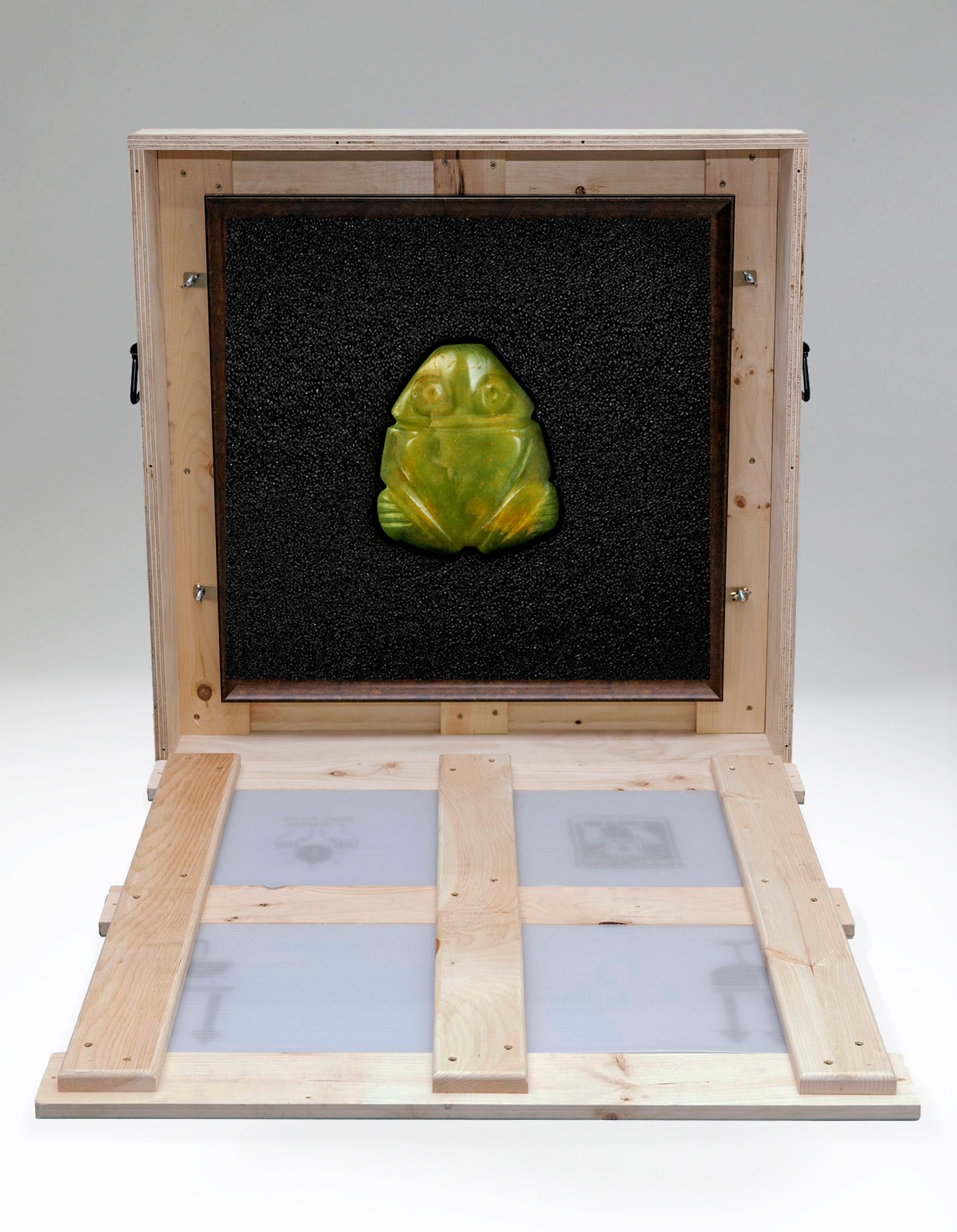
As a starting point for a stellar expansion, the muiraquitã is centered, an entity-talisman of the Tapajós and Konduri indigenous peoples of the Lower Amazon, which, made of colored stone, simulate amphibians and reptiles, especially frogs and toads. Like the patuá, an amulet of African origin, the muiraquitã is a symbol of power and protection, connected to a matriarchal production and sometimes placed as an ornament on the body.
One of the various myths of the origin of the muiraquitã comes from Orellana's icamiaba Amazons, in the Ecuadorian Amazon – warrior women without husbands, who produced the amulets to give as gifts to the men they slept with once a year, in a moon festival at the sources of the Nhamundá River. Produced to this day in various materials, such as jadeite and amazonite, they are commonly given as proof of esteem to those one wants to protect, making this set of small protective toads an unplanned collection, but anchored and expanded by affection and community relationships.
Just like the making of the muiraquitã, the craft of fashion is rarely read as an artistic practice through Eurocentric models of thought. Categories that are based on the artificiality of European fine arts neglect ancestral practices that operate robust visual, conceptual, and energetic systems, linked to the complexity of nature and indigenous peoples with expanded notions of the environment. It is therefore worth thinking about clothing from another, ambiguous epistemology, where use and contemplation do not cancel each other out, but dignify the ephemerality of natural flows and existences.
In the pieces of the collection, sustainability is not only read as a driving force in the choices of processes and materials, but structures a thought that respects the dynamics of nature, without imposing human wills and impatience towards capital. The marks of the passage of natural time, in its multiple and active manifestations of plant and mineral life, are respected in the different types of jacquard developed for the pieces, such as the complex geological patterns of the stones from which the muiraquitãs are made, unearthed gifts from the earth that kept them for millennia. The collection emphasizes that indigenous artistic production goes beyond zoomorphic, biomorphic, and anthropomorphic circumscriptions, but impetuously enters abstraction, a field usually denied by academic studies in the global south.
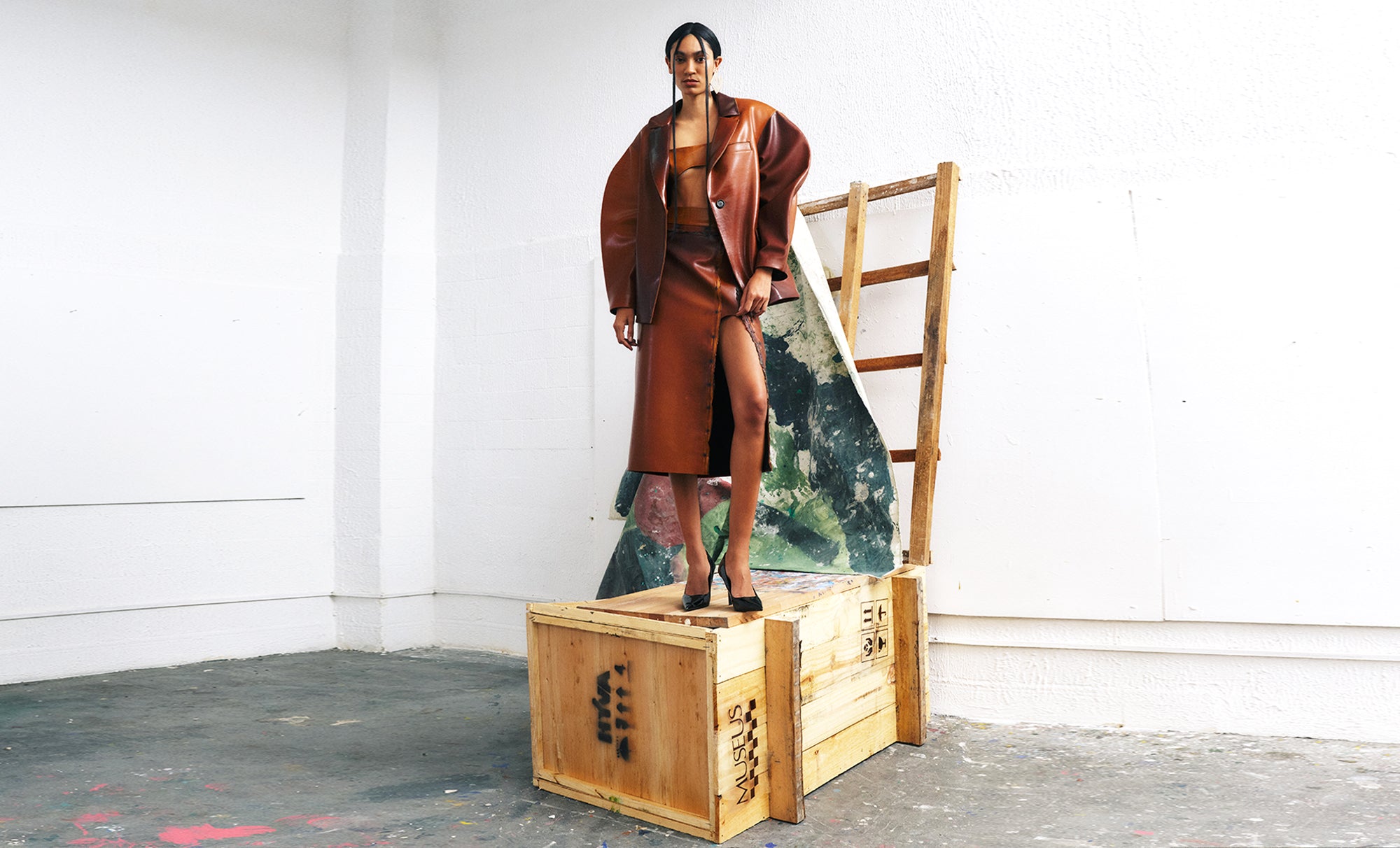
What, in certain pieces, looks like leather, is a material produced by a cooperative in ecological reserves in southern Rondônia that overlays several layers of vegetable latex produced consciously on cotton fabric sheets, then smoked, vulcanized, or sun-dried. In addition to the similarity with wood laminates – such as copaiba and andiroba, whose oils have technological medicinal properties – and brown water from Guajará Bay, the production of these pieces respects the seasonality of native rubber trees in the north of the country, the Amazonian climate and sustainability in its productive stages, in counterflow to the predatory dynamics of the rubber cycle in a modernity imposed on the Amazon. On the threshold between science and art, the individualities and nuances of each laminate are respected, as a singular memory of the path of the sun hitting the latex in contrast to the logic of factory standardization. This choice of artisanal manufacturing synergistically approaches indigenous rituals that ask natural deities for permission to hunt, in addition to organizing themselves for the removal of tree bark according to the careful observation of the phases of the moon.
Normando suggests that we collect valuable memories and traditions to rethink history and the future. It encourages, in the present, the reclamation of ancestries that reconfigure critical operations and propose more harmonious, respectful, and synergistic directions. Matter, therefore, is a testament to time that absorbs and reveals natural interferences in its multiple occurrences, in a broad worldview long held by indigenous peoples – whose extremely high technology is gradually understood by a hegemonic and obsolete scientism. Collecting, from an attentive, respectful, and sustainable epistemology, is a manifesto of resumption.
Mateus Nunes (1997, Belém, PA) is a researcher, curator, and writer. Architect and urban planner from the Federal University
of Pará, in Belém, he holds a doctorate in Art History from the University of Lisbon and is a post-doctoral researcher
at the University of São Paulo and the Getty Foundation, researching the hybridisms and cultural exchanges
in the artistic and architectural production of the Amazon during the colonial period and its reverberations in the
contemporary panorama. He frequently writes for national and international art magazines and is a professor
at MASP in courses on contemporary art from Pará and Brazilian baroque.
